Mama Square Border: A Thoughtful Embroidery Design Review
First Impressions: Warm, Clean, and Quietly Confident
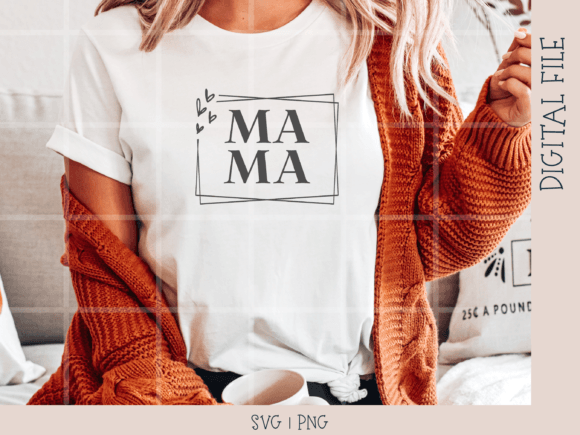
When I opened the Mama Square Border files—just one crisp 300 dpi PNG and one SVG in clean black—I felt that familiar quiet click of recognition. Not flashy, not fussy. Just a centered “Mama” inside a tidy square frame, softened at the corners with delicate hearts. It’s not cutesy or trendy; it’s grounded. The kind of design that feels like it belongs on a well-loved kitchen towel folded over a stovetop handle—or stitched onto the chest of a soft cotton baby onesie handed to a new parent with zero fanfare and maximum sincerity.
Where It Shines: Real Projects, Real People
Last week, I used Mama Square Border to embroider a set of linen tote bags for a local boutique’s Mother’s Day launch. We chose medium-weight natural linen, medium-cut stabilizer, and matte black thread. The result? Crisp edges, even satin-stitched borders, and lettering that held its shape without looking stiff. Customers didn’t just buy the bag—they paused. Touched the stitching. Said things like, “That feels like *me*.” That’s the quiet power of this design: it reads as intentional, not generic. It works beautifully on sweatshirt embroidery where texture could swallow lesser graphics—it holds up because the square border creates visual weight, and the hearts add just enough softness to balance the structure.
It also translated cleanly to a small embroidered patch (2.5” square) for a nursery wall hanging. No detail loss. No corner distortion. And when stitched on a curved surface like a dad cap? I resized it down to 1.75”, kept the hoop tight, and used tear-away + cut-away combo stabilizer—still came out legible and balanced. That’s rare for text-based designs with geometric framing.
Where to Proceed with Care
Mama Square Border isn’t built for ultra-fine detail work. If you’re planning baby embroidery on 100% cotton interlock onesies—especially in sizes newborn–3M—test stitch density first. The square border and inner hearts rely on consistent fill stitch coverage. On thin or stretchy fabric, a denser fill can cause puckering unless stabilized properly. I recommend testing on scrap with your exact fabric + stabilizer combo before committing to a full run.
Dark fabric demands attention too. Since the original file is black font only, you’ll need to choose thread colors deliberately—not just for contrast, but for mood. Navy thread on charcoal heather gives warmth; white or ecru on black denim reads elevated and modern. Avoid pale pastels on dark backgrounds unless you’re using underlay stitches to lift the top layer.
Also note: the hearts are small but distinct. They’re not pixelated in the PNG, but if you scale Mama Square Border below 1.5”, those hearts may lose clarity in machine embroidery—especially on textured fabrics like terry cloth or bouclé. Save it for smooth, stable surfaces: cotton poplin, twill, canvas, fleece-backed sweatshirts, or medium-weave linen.
What It Adds to Your Finished Product
This isn’t just another T-Shirt Designs graphic—it’s a subtle brand amplifier. When stitched onto an apron for a small-batch baking kit, Mama Square Border signaled care, continuity, and quiet pride. Customers associated it with craftsmanship, not clip art. That perception lifts perceived value, builds trust, and supports repeat purchases. For Etsy sellers and handmade shop owners, that matters deeply: buyers don’t just want personalized gifts—they want proof of intention behind every stitch.
The square format also plays well across product lines. Use it identically on tea towels, pillow covers, and baby blankets, and you’ve got cohesive design assets without needing to redraw anything. That consistency strengthens boutique branding and makes printable mockups feel unified and professional—even when shown across different garment types.
Practical Notes from the Hoop
- Always test first: Stitch Mama Square Border on scrap fabric matching your final project’s weight, weave, and stretch.
- Check thread color contrast early: Black-on-black won’t read. Try charcoal on deep burgundy, or cream on olive—then verify in natural light.
- Review stitch density: If your machine struggles with dense fills, reduce density slightly—but never sacrifice the integrity of the square border’s edge.
- Confirm hoop size compatibility: At standard size (approx. 3–4”), it fits most 4x4 hoops comfortably. Resizing up? Check your machine’s max hoop capacity before digitizing or scaling.
- Inspect small details: Zoom in on the hearts in your embroidery software. Make sure no stray nodes or anchor points will cause jump stitches.
- Test black-and-white mockups: Does it retain character in grayscale? Yes—thanks to strong negative space and clear geometry.
- Stabilizer is non-negotiable: Medium-cut for stable fabrics; cut-away + tear-away hybrid for knits or lightweight cottons.
- Licensing check: Since this is a digital embroidery file sold as Graphics, confirm whether commercial use is permitted before selling finished embroidered products or bundling into digital product kits.
A Design That Grows With You
Mama Square Border doesn’t shout. It settles in. Whether you’re embroidering a holiday embroidery gift for a sister-in-law, building a small shop product line around motherhood themes, or creating custom apparel for a local preschool’s family day—this design adapts without losing its voice. It’s versatile enough for craft fair merchandise, refined enough for boutique branding, and warm enough to feel personal without veering into cliché.
As a designer who’s reviewed hundreds of embroidery files, I keep returning to simplicity that *works*—not just looks nice on screen. Mama Square Border delivers that. It’s ready for real fabric, real machines, real customers—and real moments that deserve thoughtful stitching.