No One Should Live in a Closet LGBT
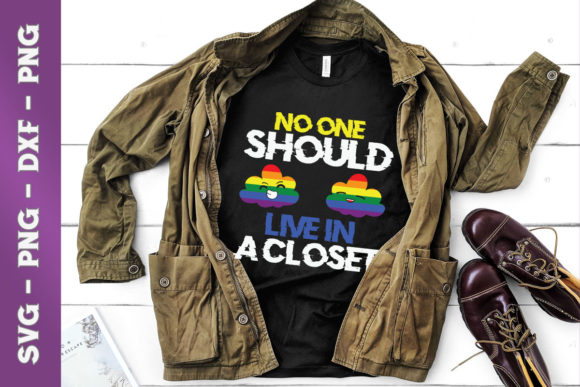
As someone who’s stitched thousands of designs—from delicate baby onesies to bold boutique sweatshirts—I opened No One Should Live in a Closet LGBT expecting clarity, intention, and embroidery readiness. What I found was a clean, emotionally grounded graphic that lands with quiet strength—not loud, not cluttered, but unmistakably human. It’s the kind of design that doesn’t shout for attention; it earns it through sincerity and smart visual rhythm.
A Real Moment: Stitching This on a Linen-Cotton Tote Bag
Last week, I prepped No One Should Live in a Closet LGBT for a custom linen-cotton tote bag—intended as a Pride Month gift for a local bookstore owner. The fabric had subtle texture and zero stretch, which is ideal—but also unforgiving for poorly spaced lettering or thin strokes. I loaded the SVG into my digitizing software, checked spacing, and ran a test stitch on scrap. The phrase held up beautifully: even at 3.5 inches wide, every word remained legible, with breathing room between letters and balanced weight across the line. No awkward crowding, no fragile serifs snapping mid-stitch. That’s rare in text-based embroidery files—and it tells me this wasn’t just traced and exported. Someone thought about how thread behaves.
Where It Shines (and Where It Asks for Thought)
No One Should Live in a Closet LGBT works best where message meets material with intention. On medium-weight cotton tees? Excellent—especially when paired with soft-touch thread for a relaxed, wearable feel. On structured sweatshirts? Strong contrast and generous letter height keep it readable from across a room. As a patch? Yes—its flat, graphic nature translates cleanly to applique design workflows, and the clean edges hold up well under satin stitch borders.
But let’s be practical: this isn’t a one-size-fits-all embroidery file. On baby onesies or tiny caps, scale becomes critical. At under 2 inches wide, the lowercase “l” and “t” start to compress visually—fine for screen print, less forgiving in fill stitch. If you’re planning No One Should Live in a Closet LGBT for infant wear or curved hat fronts, test stitch first. And on dark fabrics? Confirm your thread colors offer enough contrast—especially if using matte or heathered threads that mute brightness.
Fabric & Function: What You’ll Want to Consider
- Thin or lightweight fabrics: Use light- to medium-weight cutaway stabilizer underneath—this design has open negative space, so backing support prevents puckering.
- Stretchy knits (like jersey tees): Hoop with stabilizer *and* topping—running stitch outlines can snag or distort without surface control.
- Textured surfaces (linen, terry cloth, canvas): Slightly increase stitch density in key letterforms if needed—test on scrap to avoid floating threads or skipped stitches.
- Dense or layered garments (quilts, blankets, double-layered pillow covers): Check whether your machine handles thicker stacks comfortably before committing to full-size placement.
More Than Just a Phrase—It’s a Brand Moment
When you use No One Should Live in a Closet LGBT in your craft business, Etsy shop, or small-batch apparel line, you’re not just adding text—you’re signaling values. Customers notice that. A well-executed version on a handmade apron or tea towel reads as thoughtful, not transactional. It elevates the finished product from “nice” to “meaningful.” That builds trust—especially for buyers seeking inclusive, affirming design assets.
That said, professionalism hinges on execution. If the “LGBT” portion gets lost in dense fill stitch or muddy thread choices, the impact blurs. I recommend stitching it in two tones—say, charcoal gray for “No One Should Live in a Closet” and vibrant coral for “LGBT”—to honor both gravity and celebration without overcomplicating the layout.
Design Assets That Support Real Work
The included file suite—SVG, PNG, DXF, EPS—is solid for multi-use flexibility. SVG and EPS handle clean scaling for digitizing or vector editing; PNG gives quick mockup visibility; DXF supports some CNC or laser workflows if you branch into embroidered patches with fused backing. None are niche or obsolete formats—just reliable, widely supported options.
But here’s what matters more than format count: how the shapes behave when translated to thread. I checked corner radii, stroke consistency, and kerning. All hold up. There’s no hidden micro-detail that’ll vanish in satin stitch, no hairline gap that’ll trap lint or fray. That’s the mark of a designer who’s stitched before they exported.
Before You Stitch, Here’s Your Quick Checklist
- Test No One Should Live in a Closet LGBT on scrap fabric matching your final project’s weight and texture.
- Compare thread color contrast on both light and dark backgrounds—especially for digital mockups.
- Verify hoop size compatibility—some versions may need a 4x4 or larger, depending on your intended scale.
- Inspect small details at actual stitch size: are terminals crisp? Does “LGBT” sit evenly beneath the phrase?
- Confirm licensing terms—this is a digital embroidery file meant for personal *and* commercial embroidery projects, but always double-check usage rights before listing on Etsy or bundling into craft kits.
- Use appropriate stabilizer—light cutaway for stable wovens, tear-away + topping for knits.
Final Thought: Design With Purpose, Not Just Placement
No One Should Live in a Closet LGBT isn’t flashy—but it doesn’t need to be. Its strength lies in restraint, readability, and resonance. It belongs on pieces people keep: a favorite tote, a child’s first Pride tee, a barista’s apron, a holiday gift wrapped with care. When stitched with attention to fabric, thread, and intention, it becomes more than a T-Shirt Design—it becomes part of someone’s story.
If you’re an embroidery designer, Etsy seller, or small shop owner building a catalog of graphics with heart and craft, this is the kind of embroidery file worth testing, trusting, and returning to—not because it’s trendy, but because it’s true.