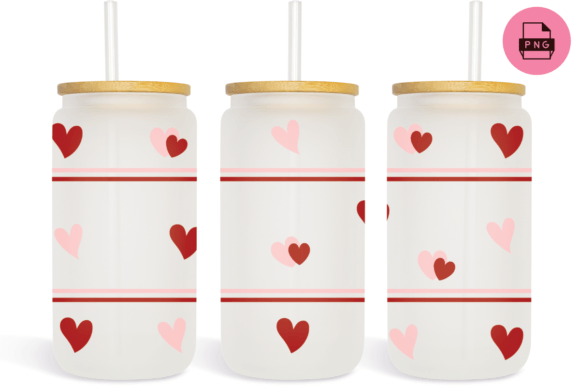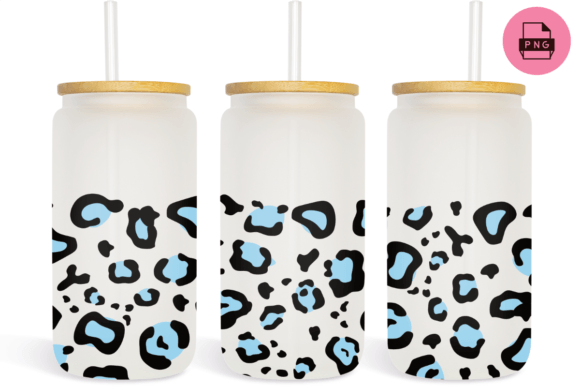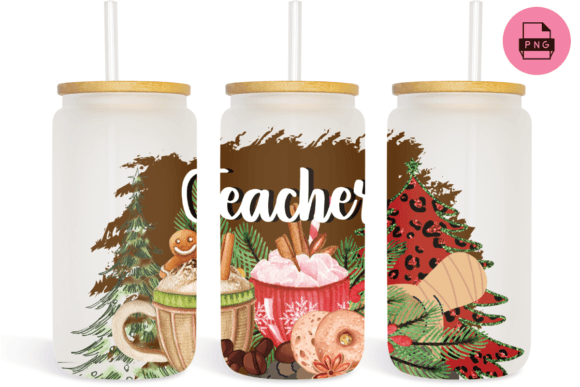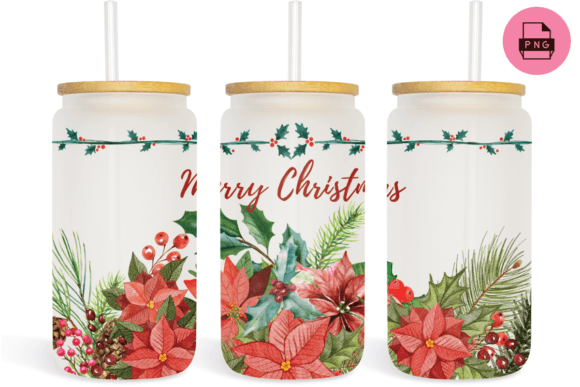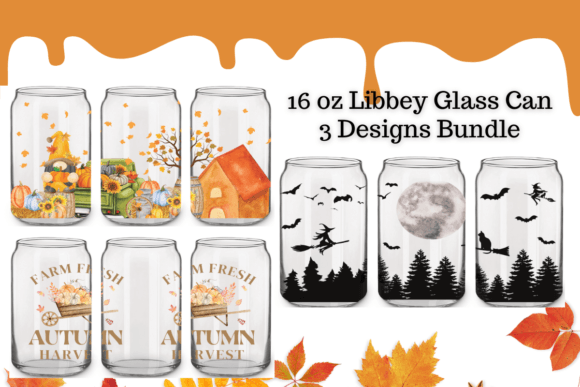
Fall Halloween Libbey Glass Can Bundle
As a designer who’s stitched over 200 holiday-themed embroidery projects for Etsy shops, boutique clients, and craft fairs—most recently a line of Halloween kitchen towels and baby onesies—I opened the Fall Halloween Libbey Glass Can Bundle expecting something playful but practical. What I found wasn’t just another seasonal graphic—it was a tightly composed, sublimation-ready template built around a very specific real-world object: the 16 oz Libbey Glass Can tumbler. That specificity changes everything.
A Design That Starts with the Object, Not the Aesthetic
The first thing that stands out is how the layout respects the physical shape of the glass can. At 9.75" wide by 5" tall, it’s not stretched or distorted to fit a generic rectangle—it’s calibrated for curvature, vertical flow, and visibility when wrapped around a narrow, cylindrical surface. That means if you’re planning to embroider this onto a tote bag or pillow cover, you’ll need to mentally “flatten” the design—but more importantly, you’ll want to test how its rhythm holds up on flat fabric. The motif leans into classic fall-halloween fusion: subtle pumpkins, leafy vines, and soft script lettering—not cartoonish, not spooky, but warmly nostalgic. It feels like something you’d see on a small-batch coffee shop’s seasonal apron or a handmade tea towel sold at a local harvest market.
Where This Design Truly Shines (and Where It Needs Caution)
In my latest project—a set of embroidered linen kitchen towels for a client’s autumn pop-up—I used a similar layout as a starting point. The Fall Halloween Libbey Glass Can Bundle would’ve worked beautifully there: the balanced negative space allows satin-stitched outlines to breathe, and the moderate detail level avoids overloading fill stitch density. It translates well to sweatshirt embroidery when scaled down to ~4.5", especially on midweight fleece where thread coverage stays crisp. On baby embroidery? Yes—with one caveat: avoid placing the finer vine details near seams or elastic hems where stitching tension could distort them.
But here’s where realism matters: this is a sublimation design, not a native machine embroidery file. That means it’s optimized for heat-transfer printing—not direct stitch execution. If you’re planning to convert it into an embroidery file for custom apparel or embroidered patches, treat it as a high-res reference—not a plug-and-play asset. You’ll need to digitize it thoughtfully, adjusting stitch direction for curved surfaces (like caps), simplifying tiny lettering for readability at small hoop sizes, and reinforcing corners where vector lines meet sharply.
Smart Use Cases for Craft Businesses and Makers
- Tote bag design: Works best centered on medium-weight canvas—let the 9.75" width anchor the composition without crowding handles.
- Sweatshirt embroidery: Scale to 4–4.75" wide; pair with a simple running-stitch border to echo the vine motif.
- Personalized gift: Embroider alongside a name or date in matching thread for nursery decor or teacher appreciation sets.
- Etsy seller asset: Use the PNGs in printable mockups to show how the design wraps the actual Libbey tumbler—adds instant credibility to digital listings.
- Craft fair merchandise: Print it on iron-on vinyl for quick heat-pressed aprons or tea towels—no digitizing needed.
What to Check Before You Stitch (or Sell)
I always run three quick checks before committing this kind of design to a finished product:
- Stabilizer match: For textured fabrics like terry cloth or heavy linen, use cutaway + tear-away combo. Skip lightweight stabilizers—they won’t support the design’s horizontal span.
- Thread color contrast: Test on both light and dark fabric swatches. The original palette relies on tonal subtlety—on black cotton, some vine details may vanish unless you adjust thread saturation or add outline stitches.
- Licensing clarity: Since this falls under Print Templates and Graphics, confirm whether commercial embroidery rights are included. Many sublimation templates allow physical product sales but restrict resale of digitized files. When in doubt, contact the creator before listing embroidered patches or custom apparel on your Etsy shop.
Why This Feels Like a Thoughtful Design Asset—Not Just Another Download
There’s a quiet professionalism in how the Fall Halloween Libbey Glass Can Bundle avoids visual clutter. No excessive glitter effects, no over-rendered shadows, no forced symmetry. It leaves room for your craftsmanship to speak—whether you’re stitching a single personalized sweatshirt or producing 50 embroidered tea towels for a boutique order. That restraint builds customer trust: buyers recognize intentionality, not algorithmic trend-chasing. And because it’s rooted in a real product shape (not abstract art), it supports cohesive branding—imagine pairing it with matching sublimated tumblers, then offering embroidered versions of the same design on aprons and oven mitts.
For handmade product creators, that consistency is gold. It turns a seasonal design into a mini-collection. For embroidery designers, it’s a reminder that great digital embroidery file inspiration often lives outside the stitch file itself—in smartly proportioned, context-aware graphics like this one.
Final Notes from the Hoop
If you’re evaluating the Fall Halloween Libbey Glass Can Bundle for real project use: print it at actual size on scrap fabric first. Trace the outline, mark where key elements land relative to seam allowances, and hold it up to natural light—see how the balance shifts on different backgrounds. Then ask yourself: does this elevate the item I’m making, or does it compete with it? With this design, the answer tends to be “elevate”—as long as you honor its proportions, respect fabric behavior, and treat it as a foundation—not a final stitch.
It’s not flashy. It’s not trying to be. But for craft business owners building authentic, seasonally grounded collections, the Fall Halloween Libbey Glass Can Bundle is exactly the kind of quietly capable design asset that earns repeat customers—and makes holiday prep feel less like scrambling, and more like curating.