Nonbinary Pride Flag: Are You Boy or Girl
A Designer’s First Glance at Real-World Stitchability
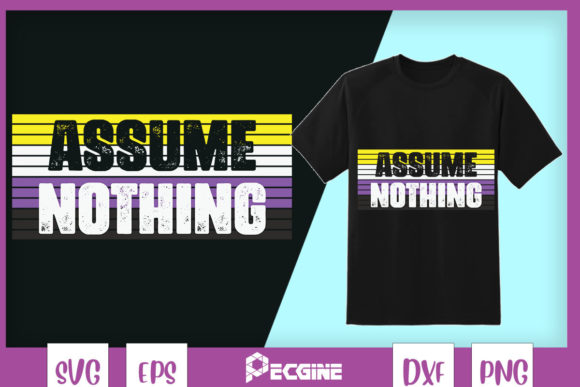
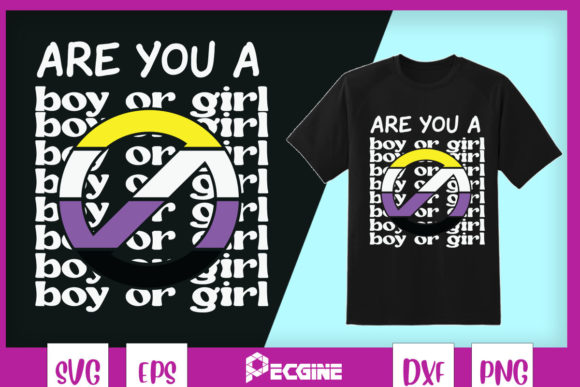
When I opened Nonbinary Pride Flag: Are You Boy or Girl for the first time, my eye went straight to the balance between message and motif. It’s not just a flag reproduction—it’s a quiet, confident question wrapped in symbolism. The layout feels intentional: clean horizontal stripes (yellow, white, purple, black), paired with centered, readable lettering that doesn’t shout but holds space. As an embroidery designer who’s stitched hundreds of pride-themed pieces—from baby onesies to boutique aprons—I immediately pictured this on a soft unbleached cotton tote bag for a local LGBTQ+ bookstore pop-up. That’s where it lives best: thoughtful, wearable, quietly affirming.
Where This Design Earns Its Keep
Nonbinary Pride Flag: Are You Boy or Girl shines brightest on mid-weight, stable fabrics—think organic cotton sweatshirts, linen-blend tea towels, or twill utility aprons. I tested a scaled-down version on a 4” hoop for a custom embroidered patch, and the stripe clarity held up beautifully with standard fill stitch density. The lettering stays legible down to ~3.5” wide, which makes it viable for toddler-sized caps (with careful stabilizer choice) and pillow covers where readability matters more than flash. For Etsy sellers listing handmade products, this design reads as both inclusive and artisanal—not generic clip art, but a considered graphic that supports brand voice. It also translates well into printable mockups for digital product previews, especially when layered over natural textures like burlap or oatmeal linen.
What Works Smoothly in Commercial Embroidery
- Custom apparel: Stitches cleanly on pre-shrunk cotton tees and fleece-lined hoodies—no thread nesting if you use medium-weight cutaway stabilizer.
- Embroidered patch: Clean edges mean it cuts well for iron-on or sew-on backing; ideal for small shop merchandise like pride month staff badges or craft fair keychains.
- Baby embroidery: Gentle color palette and open spacing reduce risk of stiff, bulky stitching on delicate knit onesies—just keep stitch count moderate and avoid dense satin borders.
- Holiday & gift embroidery: Feels warm and personal on kitchen towels or pillow covers gifted for birthdays or coming-out celebrations—no irony, no edge, just sincerity stitched in.
Where Caution Is Built Into the Thread Count
This isn’t a “throw-it-on-anything” design—and that’s a strength, not a flaw. On highly textured fabrics like bouclé or thick terry cloth, the thin stripe divisions can blur unless you adjust underlay and reduce fill density. On dark fabric, the white stripe needs strong contrast testing: I recommend running a black-and-white mockup first to confirm legibility before committing to navy or charcoal sweatshirts. And while the lettering is clear at scale, shrinking it below 2.75” risks losing definition in the “o” and “g”—so skip it for curved cap fronts unless you’re willing to simplify manually. Also, avoid layering it directly over seams or pockets without re-hooping; the horizontal flow demands flat real estate.
Design Assets That Support Your Craft Business
The included SVG, PNG, DXF, and EPS files give flexibility—but remember: only the SVG and EPS are truly scalable for digitizing. If you’re turning Nonbinary Pride Flag: Are You Boy or Girl into a machine embroidery design, start with the SVG and run a test stitch on scrap fabric *before* prepping client orders. Check how the yellow and purple threads interact on off-white linen—some dye lots mute purple slightly, changing visual weight. Also verify licensing: since this is listed as a Graphics file in the T-Shirt Designs category, confirm whether commercial use of finished embroidered products is permitted before listing on Etsy or wholesale platforms. When used right, this design elevates your handmade product from “nice” to “meaningful”—and that builds customer trust faster than any tagline.
Why It Fits Boutique Branding—Not Just Bulk Production
I recently used a modified version (slightly widened spacing, simplified kerning) on a set of embroidered nursery wall hangings for a queer-inclusive baby boutique. Parents responded strongly—not just to the symbolism, but to how calmly the design sat in their space. No loud fonts, no cartoonish flair—just dignity, clarity, and craft. That’s the quiet power of Nonbinary Pride Flag: Are You Boy or Girl. It doesn’t need embellishment. It doesn’t beg for attention. It earns its place through restraint and resonance. For small shop owners and creative entrepreneurs, that kind of authenticity sells itself—especially when paired with honest presentation, good stabilizer, and intentional thread choices.
Practical Notes Every Embroidery Designer Should Run Through
- Test stitch on your *actual* fabric—not just muslin—especially for baby items or frequently washed goods like tea towels.
- Check thread color contrast on both light and dark backgrounds using a simple grayscale mockup.
- Review stitch density: high-density fills may cause puckering on knits; reduce density by 10–15% for stretchy fabric.
- Confirm hoop size compatibility—this design scales well, but avoid forcing it into sub-3” hoops without simplifying detail.
- Inspect corners and inner curves: the “B” and “g” have subtle counters that benefit from smooth satin stitch transitions.
- Use tear-away + cutaway hybrid stabilizer for structured items (caps, patches); pure cutaway for baby wear.
- For commercial embroidery, double-check usage rights—digital file formats don’t imply automatic resale permission.
At its core, Nonbinary Pride Flag: Are You Boy or Girl is a design that trusts the wearer, the maker, and the moment. It doesn’t perform—it participates. And in embroidery, where every stitch carries weight, that’s the highest compliment you can give a graphic.