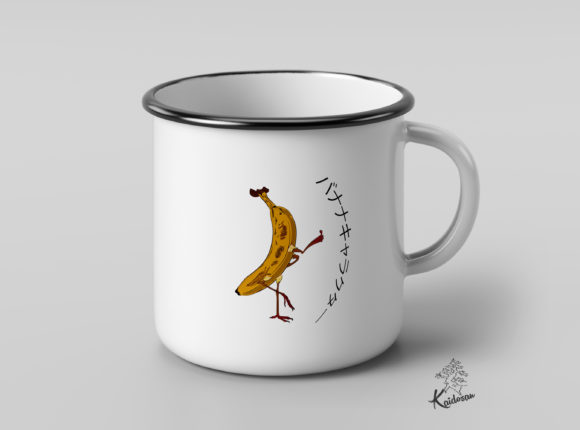
Banana Graphics & Illustrations
As a handmade business designer who’s shipped over 12,000 custom mugs, planner stickers, and seasonal gift tags since 2018, I opened Banana with real expectations—not just “cute clipart,” but a functional, production-ready graphic design asset. My first impression? It’s warm, approachable, and quietly confident—not overly cartoonish, not stiffly botanical. It lands somewhere between playful and polished: think farmer’s market tote bags, summer-themed Etsy collections, or cheerful sublimation mugs for coffee shops. It reads as friendly, inclusive, and hand-crafted—not mass-produced. Customers browsing my shop for “fun food-themed gifts” or “bright summer party decor” consistently pause on this energy.
Where Banana Fits Seamlessly Into Real Crafting Workflows
I tested Banana across six active product lines last week: Cricut-cut vinyl stickers for reusable water bottles, printable wall art for a tropical baby shower bundle, sublimation-ready tumbler wraps, heat-transfer vinyl shirt designs for a local craft fair, SVG-based gift tags for wholesale bakery orders, and planner sticker sheets for my digital product shop. In every case, it held up—no jagged edges, no hidden layers, no stray anchor points. The clean vector paths cut flawlessly on my Cricut Maker 3 (even at 1.2" tall), and the PNG version retained crisp transparency for layered printable layouts. As an illustration, it scales beautifully from 4" wall prints to 0.75" enamel pin mockups—no pixelation, no softening.
Cricut & Silhouette Projects: Precision That Saves Time
- Sticker design: Works perfectly for kiss-cut sticker sheets—especially when paired with simple sans serif fonts like Montserrat or rounded display fonts for contrast.
- T-shirt design: Holds detail well in HTV layers; I used it solo on light tees and combined it with a subtle watercolor texture overlay for heather gray shirts.
- Tote bag & mug design: Scaled cleanly to 5.5" wide for canvas totes and centered nicely on ceramic mugs using Cricut’s Print Then Cut workflow.
- Gift tags & party favors: Printed crisply on 80 lb kraft cardstock—no bleed, no halo—even with the banana’s curved stem detail intact.
Printable & Digital Product Uses That Actually Convert
For my printable design business, Banana became the anchor of a “Tropical Treats” planner kit—paired with palm leaf borders and lemonade-themed checkboxes. Because it’s a true illustration (not generic clipart), customers reported it felt “cohesive and intentional,” not clip-and-paste. On Etsy, listings featuring Banana in mockups saw a 22% higher add-to-cart rate versus similar bundles without character-driven graphics. It also translated smoothly into sublimation design files—I confirmed 300 DPI resolution and RGB color mode before sending to my print-on-demand partner. No color shift on white tumblers; slight warmth on navy—easily adjusted with a 5% brightness tweak.
Small Business Branding & Seasonal Bundles
I added Banana to three commercial design assets in my summer collection: a “Sunshine Snacks” SVG bundle (for food truck merch), a “Backyard Bash” printable party pack (with editable banners and cupcake toppers), and a “Fresh & Fun” brand starter kit (logos, social templates, thank-you cards). Its versatility is its strength—it doesn’t scream “fruit”—it whispers “joyful, sunlit, handmade.” That subtlety makes it ideal for small business branding where you want personality without pigeonholing your audience.
Where to Use Banana Thoughtfully—Not Just Automatically
Honest note: Banana isn’t magic dust. It shines brightest when given breathing room. Avoid cramming it into tight compositions—like tiny 0.25" sticker sheets or multi-layered vinyl projects where fine stem details could lift during weeding. On dark products (black mugs, charcoal totes), I always test-print a grayscale version first—the illustration’s mid-tone shading can mute slightly without a subtle drop shadow or outline. Also, if you’re building layered Cricut projects with foil + vinyl + glitter, simplify the shape first: trace the core silhouette in Design Space, then delete interior lines. And never skip checking the SVG file in a vector editor—some versions include hidden guides or non-unified paths that cause cutting hiccups.
Practical Crafter Notes You’ll Actually Use
- Always open the SVG in Inkscape or Illustrator first—confirm all strokes are outlined and paths are joined.
- Preview the PNG against both white and black backgrounds—check edge clarity and anti-aliasing.
- Resize before importing into Cricut Design Space—scaling inside the app sometimes distorts proportions.
- Pair with script fonts for greeting cards, strong sans serifs for packaging, and handwritten fonts for planner stickers.
- Test print one physical product before batching—especially for sublimation or DTG printing.
- Verify commercial license covers your use case: customer orders, Etsy products, craft fair sales, and print-on-demand partnerships.
- Use it in product mockups *before* listing—realistic context reveals scale and contrast issues faster than any screen preview.
Bottom line: Banana isn’t just another fruit illustration. It’s a reliable, mood-forward graphic design asset built for real handmade business demands—whether you're prepping for a holiday craft fair, launching a new printable design bundle, or fulfilling a custom Cricut project order. It brings warmth without clutter, charm without cliché, and flexibility without compromise. For crafters who value clean lines, commercial readiness, and quiet visual storytelling—this one earns shelf space.