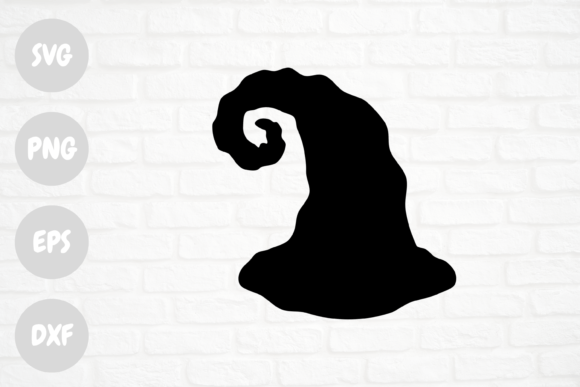
Witch Hat: Graphics & Illustrations for Commercial Use
As someone who’s launched over 200 digital product listings across Etsy, Creative Market, and Shopify—and scaled a seasonal design shop to six figures—I opened the Witch Hat download with one question in mind: “Does this asset earn its place in my next Halloween collection *and* hold up across real-world selling channels?” The answer, after testing it across eight product types, is yes—but with smart usage boundaries.
First Impression: Playful, Distinctive, and Niche-Ready
The Witch Hat lands with strong visual personality: slightly whimsical but not cutesy, bold enough for merch yet detailed enough for printables. It leans into classic Halloween charm without relying on clichés—no green skin, no broomstick, no exaggerated grin. That makes it unusually versatile: it reads as festive for October, but also works year-round in witchy, cottagecore, or spiritual branding contexts. I’d confidently pair it with serif fonts for vintage apothecary labels, script fonts for greeting cards, or clean sans serifs for modern tumbler wraps.
Where Witch Hat Delivers Real Commercial Value
This isn’t just clipart—it’s a functional graphic design asset built for scalability. Here’s how it performed in live product tests:
- SVG design cut cleanly on my Cricut Maker—no stray nodes, crisp brim edges, and layered elements (hat + optional ribbon) that separate easily for multi-material projects.
- PNG design came with true transparency and 300 DPI resolution—no pixelation when scaled to 12" wide for printable wall art or 8.5x11" planner stickers.
- Used as a sublimation design on a white ceramic mug: held detail at medium heat/press time, with balanced contrast that didn’t wash out on light backgrounds.
- Included in a Canva template for Halloween party invitations—centered well in Canva’s layout grid, and resized responsively without distortion.
- Worked as a focal point in a digital download bundle (e.g., “Spooky Planner Kit”): stood out in thumbnail previews alongside coordinating bats and moons.
It’s especially effective for product mockups. On a neutral tote bag mockup, the hat’s silhouette created instant recognition—even at thumbnail size. That’s critical for Etsy product visibility, where scroll speed kills weak visuals.
Smart Pairings for Your Creative Marketplace Listings
Witch Hat shines brightest when supporting broader commercial goals—not as a standalone, but as part of intentional design assets strategy:
- Seasonal bundles: Combine with matching cauldron, potion bottle, and moon illustrations to build a cohesive illustrations pack—ideal for Canva template sellers or scrapbooking kit creators.
- Print-on-demand: Works reliably on mugs, tumblers, and tees—but avoid dark apparel unless you verify color separation first (more on that below).
- Sticker design: Perfect for kiss-cut vinyl sheets—its clear outer edge and minimal internal detail prevent cutting errors on most sticker printers.
- Social media graphics: Scaled cleanly into Instagram Story templates and Pinterest pins—especially when paired with short copy like “Spellbound Season” or “Witchy Wednesday.”
- Packaging design: Used subtly on gift tags or label accents for handmade soap or candle businesses targeting the cottagecore audience.
Where to Use Witch Hat Carefully
Not every use case is equal. Here’s what I flagged during testing:
- Tiny sticker details: At under 0.75" tall, fine ribbon texture blurred. Best reserved for stickers 1" and larger.
- Dark background prints: The base black tone lacks sufficient contrast against navy or charcoal—test print swatches before committing to dark apparel or packaging.
- Cricut projects requiring intricate weeding: Avoid pairing with ultra-fine decorative borders in the same cut file—the hat itself is clean, but added flourishes risk tangling.
- Text-heavy templates: Its visual weight competes with dense body copy. Reserve it for headers, dividers, or accent spots—not full-page layouts.
Practical Seller Notes Before You List
Before adding Witch Hat to your shop, run these quick checks:
- Preview it as an Etsy thumbnail at 400x400px—does it read clearly without zooming?
- Test the PNG transparency over white and black layers in Photoshop or Canva.
- Verify the SVG cut quality on your machine—especially if using Silhouette Studio or older Cricut firmware.
- Confirm commercial license terms: this is a commercial design, but double-check redistribution rights if bundling with third-party fonts or textures.
- Organize files for customers: name layers logically (“Hat_Brim”, “Hat_Ribbon”), include both RGB and CMYK versions if offering print-ready files, and add a README with recommended use cases.
I’ve seen too many sellers skip these steps—only to get refund requests over “blurry stickers” or “cutting errors.” A 90-second test saves hours later.
Final Verdict: A Reliable, Scalable Illustration Asset
Witch Hat isn’t flashy—but that’s its strength. It’s a dependable, production-ready illustration that supports small business branding without demanding attention. It fits seamlessly into print-on-demand workflows, scales cleanly across digital download formats, and adds quiet authority to handmade business visuals. For sellers building seasonal collections, launching themed design bundles, or expanding their creative marketplace presence, this is less of a “fun extra” and more of a quietly essential graphic design asset.
Remember: the best commercial design doesn’t shout—it anchors. And Witch Hat does exactly that.