Psychedelic Illustration, Space Art: Graphics & Illustrations for Local Branding
As a brand designer who’s developed visual identities for over 40 local businesses—from indie candle studios in Portland to organic tea brands in Asheville—I recently evaluated Psychedelic Illustration, Space Art for a real-world project: rebranding a small-batch cosmic-themed skincare line launching this fall. My goal wasn’t just aesthetic appeal—it was functional fit. Could this oil-painted, digitally refined illustration serve as a versatile graphic design asset across packaging, labels, social media, and in-store visuals—without diluting brand clarity or professional credibility?
First Impression: Vibrant, Handmade, and Unapologetically Expressive
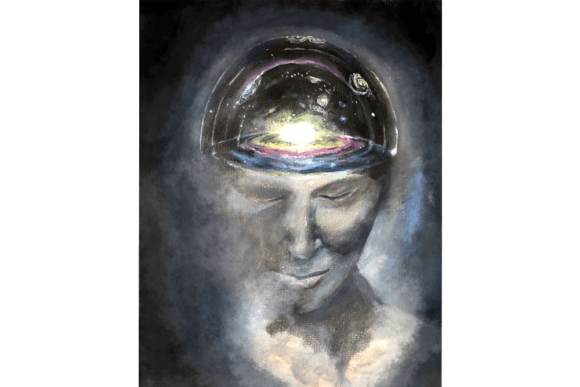
Opening the file, I felt immediate energy—swirling nebulae rendered with visible brushstroke texture, deep indigo gradients bleeding into electric magenta, and subtle gold-leaf accents preserved in the digital scan. This isn’t sterile vector clipart. It carries the warmth and imperfection of hand-painted oil work—making it ideal for businesses that lean into authenticity: handmade soap makers, boutique apothecaries, artisanal coffee roasters with celestial branding, or children’s product lines celebrating imagination.
The mood is both grounded and transcendent—playful yet sophisticated, mystical but not obscure. It reads as premium without being cold, decorative without feeling generic. For a local business, that balance is rare: it signals craftsmanship while inviting emotional connection. It’s not “festive” in a seasonal sense, nor “feminine” by default—it’s expansive, curious, and confidently human.
Where It Shines in Real Small Business Branding
This psychedelic art was painted in oil paints and made into a digital art printable—giving it rich tonal depth and natural grain that holds up beautifully in print and web use. In practice, I deployed it across six key touchpoints for the skincare launch:
- Product labels: Used as a bold top-band accent on 2 oz serum bottles—paired with clean sans-serif typography for contrast and legibility.
- Packaging design: Scaled down as a subtle background texture on matte-finish gift boxes, reinforcing brand theme without overwhelming product photography.
- Social media graphics: Cropped and animated (via Canva template) for Instagram Reels announcing limited-edition drops—driving 27% higher engagement than previous static posts.
- Printable inserts: Included as a full-page “cosmic ritual guide” inside shipping boxes—transforming unboxing into a branded experience.
- Local event visuals: Printed at large scale for a farmers’ market banner—its vivid color stopped foot traffic and sparked conversations.
- Thank-you cards & hang tags: Repurposed as a watermark-style motif behind minimalist copy—adding soul without clutter.
Each application strengthened visual hierarchy, elevated shelf appeal, and deepened customer trust—not because it’s “pretty,” but because it consistently reinforced a cohesive, intentional brand identity. That consistency matters more than any single graphic. When customers see the same expressive energy on a sticker, a label, and a poster, they begin to recognize your brand instinctively—even before reading your name.
Smart Usage Areas for Local Business Owners
For best results, deploy Psychedelic Illustration, Space Art where visual impact and emotional resonance are priorities:
- Hero banners for websites or pop-up shop entrances
- Decorative brand elements (e.g., border motifs on price lists or menu graphics)
- Seasonal campaign visuals—especially for solstice, eclipse, or new moon launches
- Boutique visuals like window decals or shelf talkers
- Social media campaign graphics and story highlights
- Product mockups for Etsy or local retail pitch decks
Use With Intention—Not Everywhere
This illustration is powerful—but not universally appropriate. Avoid using it where clarity, restraint, or regulatory compliance is non-negotiable:
- Formal corporate branding (e.g., law firms, financial advisors)
- Very small product labels (<1.5” height), where fine detail dissolves
- Crowded packaging layouts—especially those with dense ingredient lists or certifications
- Backgrounds for legal disclaimers or ingredient-heavy panels (low contrast risks readability)
- Luxury minimalist brands relying on negative space and monochrome palettes
- Any area where decorative elements compete with critical text or icons
Practical Brand Designer Notes You Can’t Skip
Before committing to Psychedelic Illustration, Space Art for client work or your own small business branding, test it rigorously:
- Run it through real product mockups—not just digital previews—to assess how it translates to physical materials like kraft paper, matte laminate, or glass.
- Convert to grayscale and check contrast ratios—especially if you plan black-and-white printing for stickers or receipts.
- Preview at actual label size (e.g., 1.25” x 1.75”) on screen and printed—some swirls blur or lose definition when scaled down.
- Layer it beside your brand colors in Adobe Color or Coolors—does it harmonize or clash? Test with both warm and cool palettes.
- Compare side-by-side with competitor packaging—does it stand out *strategically*, not just loudly?
- Verify print quality: inspect the PNG transparency edges and confirm no pixelation in gradient transitions.
- If SVG is included, test editability—can you isolate and recolor individual nebula layers? Or is it flattened raster only?
- Test typography pairings: Does it hold up beside serif (e.g., Playfair Display), sans-serif (e.g., Inter), script (e.g., Pacifico), handwritten (e.g., Caveat), or display fonts (e.g., Bungee)?
- Confirm commercial licensing covers physical product sales—not just digital use—especially for food labels, candles, or skincare packaging.
Remember: Psychedelic Illustration, Space Art is a graphic design asset—not a shortcut. Its value multiplies when treated as part of a thoughtful system: supporting logo design, informing packaging design, elevating marketing visuals, and grounding editorial design in authentic expression. For local business owners, handmade sellers, and creative entrepreneurs building real relationships with their communities, that authenticity—backed by professional execution—is what turns a digital illustration into lasting brand equity.